

Has Trump Really Ended Seven Wars? The Truth Behind His Bold Claims
- Israel and Iran: A Fragile Truce
- India and Pakistan: A Disputed Role
- Rwanda and the Democratic Republic of Congo: A Shaky Peace
- Thailand and Cambodia: A Swift Resolution
- Armenia and Azerbaijan: A Notable Achievement
- Egypt and Ethiopia: No War, No Deal
- Serbia and Kosovo: Preventing a Conflict?
- A Mixed Record
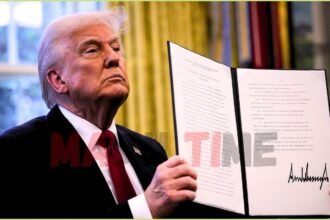
As President Donald Trump works to broker peace in the Russia-Ukraine conflict, he’s been touting his record as a global peacemaker. Speaking at the White House on August 18, 2025, amid pressure from European leaders for a Ukraine ceasefire, Trump declared, “I’ve ended six wars… all of these deals I made without even the mention of the word ‘ceasefire.’” By the next day, he upped the count to “seven wars.” His administration has hailed him as the “peacemaker-in-chief,” even suggesting a Nobel Peace Prize is overdue.
But how much credit can Trump truly claim for resolving these conflicts? Some were short-lived flare-ups rooted in long-standing tensions, and questions remain about the durability of these deals. Here’s a closer look at the six or seven conflicts Trump says he’s ended and the reality behind his claims.
Israel and Iran: A Fragile Truce
In June 2025, a 12-day conflict erupted when Israel launched strikes on Iranian targets. Trump confirmed he was briefed by Israeli Prime Minister Benjamin Netanyahu before the attacks. The U.S. joined in, targeting Iran’s nuclear sites, a move that hastened the conflict’s end. On June 23, Trump announced on social media, “Officially, Iran will start the CEASEFIRE and, upon the 12th Hour, Israel will start the CEASEFIRE and, upon the 24th Hour, an Official END to THE 12 DAY WAR will be saluted by the World.” Iran’s Supreme Leader Ayatollah Ali Khamenei claimed a “decisive victory,” avoiding mention of a ceasefire, while Israel signaled readiness to strike again if Iran rebuilds its nuclear program

Analysts like Michael O’Hanlon from a prominent think tank argue this is more a temporary pause than a lasting peace. “There’s no agreement on permanent peace or monitoring Iran’s nuclear program,” he notes, suggesting the U.S. strikes, alongside Israel’s, weakened Iran significantly. While Trump deserves some credit, the situation remains volatile, with no resolution to decades-long tensions.
India and Pakistan: A Disputed Role
Tensions between India and Pakistan, both nuclear-armed nations, flared in May 2025 after a terrorist attack in Indian-administered Kashmir. Following four days of strikes, Trump posted that the two countries agreed to a “FULL AND IMMEDIATE CEASEFIRE” after U.S.-mediated talks. Pakistan praised Trump’s “decisive diplomatic intervention” and even nominated him for a Nobel Peace Prize. However, India’s Foreign Secretary Vikram Misri downplayed U.S. involvement, insisting talks occurred directly between the two nations’ militaries.
The ceasefire halted immediate hostilities, but the underlying Kashmir dispute, dating back to 1947, remains unresolved. Experts question whether Trump’s role was as pivotal as claimed, noting that India’s military pressure likely drove Pakistan to negotiate. The ceasefire, while significant, doesn’t address the root causes, leaving the region prone to future conflicts.
Rwanda and the Democratic Republic of Congo: A Shaky Peace
The Democratic Republic of Congo (DRC) and Rwanda have faced decades of conflict, intensified by the M23 rebel group’s seizure of mineral-rich DRC territory in early 2025. In June, a U.S.-brokered peace agreement was signed in Washington, aiming to end the violence and boost trade. The deal referenced a ceasefire agreed upon in August 2024. Trump hailed it as a step toward regional stability.

However, both sides have since accused each other of violating the ceasefire, and M23 rebels, allegedly backed by Rwanda, have threatened to abandon talks. “There’s still fighting between Congo and Rwanda so that ceasefire has never really held,” says historian Margaret MacMillan. The agreement’s fragility raises doubts about its long-term impact, despite Trump’s claims of a definitive resolution.
Thailand and Cambodia: A Swift Resolution
In late July 2025, a brief border conflict erupted between Thailand and Cambodia, lasting less than a week. On July 26, Trump announced he was calling Thailand’s Acting Prime Minister to request a ceasefire. Days later, the two nations agreed to an “immediate and unconditional ceasefire.” While Malaysia hosted the talks, Trump’s threat to halt U.S. tariff negotiations a significant leverage given both countries’ reliance on U.S. exports played a key role. By August 7, an agreement was reached to ease border tensions.
This quick resolution earned Trump praise, with Cambodia’s Prime Minister Hun Manet nominating him for a Nobel Peace Prize. The conflict’s short duration and clear economic incentives made it easier to resolve, but it highlights Trump’s ability to use U.S. influence effectively.
Armenia and Azerbaijan: A Notable Achievement
On August 8, 2025, Armenia and Azerbaijan signed a peace deal at the White House, addressing their nearly 40-year conflict over Nagorno-Karabakh. The most recent fighting occurred in September 2023, when Azerbaijan seized the enclave. Both nations’ leaders credited Trump’s mediation, with some suggesting he deserves a Nobel Prize. “The Oval Office signing ceremony may have pushed the parties to peace,” says O’Hanlon, giving Trump significant credit for this diplomatic win. The agreement, which includes a U.S.-administered transit corridor called the “Trump Route for International Peace and Prosperity,” marks a step toward lasting stability, though challenges remain.
Egypt and Ethiopia: No War, No Deal
Unlike the others, the Egypt-Ethiopia dispute over the Grand Ethiopian Renaissance Dam wasn’t a war but a long-standing tension over Nile River water rights. Completed in 2025, the dam raised concerns in Egypt about water shortages.

On June 29, Egypt’s foreign minister announced talks had stalled, and Trump’s comment, “If I were Egypt, I’d want the water in the Nile,” drew mixed reactions. Egypt welcomed his involvement, but Ethiopia warned it could inflame tensions. No formal agreement has been reached, undermining Trump’s claim of resolving a “war.”
Serbia and Kosovo: Preventing a Conflict?
Trump claimed on June 27, 2025, that he prevented a “big war” between Serbia and Kosovo by threatening trade restrictions. The two nations have a history of tension from the 1990s Balkan wars, but no active conflict existed in 2025. Kosovo’s President Vjosa Osmani supported Trump’s account, citing a potential escalation, while Serbia denied war plans. “Serbia and Kosovo haven’t been fighting, so it’s not a war to end,” MacMillan notes. Trump’s first-term economic normalization agreements in 2020 add context, but his claim of stopping a war lacks clear evidence.
A Mixed Record
Trump’s claim of ending six or seven wars reflects a mix of diplomatic successes and exaggerations. His interventions in Armenia-Azerbaijan and Thailand-Cambodia show tangible results, while the Israel-Iran and DRC-Rwanda deals are fragile ceasefires.
Claims about Egypt-Ethiopia and Serbia-Kosovo stretch the definition of “war.” As Trump pushes for peace in Ukraine and Gaza, his record as a peacemaker remains under scrutiny, with some deals holding stronger than others.