


Missiles Rain on Yemen Capital: Chaos and Smoke as Israel Targets Sanaa
Thick smoke billowed over Yemen’s capital, Sanaa, on Sunday as Israeli airstrikes targeted key locations, including a power plant and a gas station, according to Houthi rebel officials. The attacks, which came days after the Iranian-backed Houthis fired a missile toward Israel, mark a fresh escalation in the ongoing conflict.
Videos circulating widely on social media captured the chaos, with fireballs lighting up the night sky and residents fleeing in panic. The strikes have heightened tensions in the region, with Houthi leaders vowing to retaliate. Below, we explore the details of this dramatic escalation and its impact on Sanaa’s residents.
A City Under Fire
The Israeli airstrikes struck multiple sites across Sanaa, shaking the capital with powerful explosions. The Houthi media office reported that a power plant and a gas station were among the primary targets, while residents noted blasts near the presidential palace and a shuttered military academy.

The strikes were the first reported in Yemen since the previous week, when Israel said it had hit Houthi-controlled energy infrastructure. Tel Aviv has yet to officially confirm its role in Sunday’s attacks, leaving residents and observers piecing together the events.
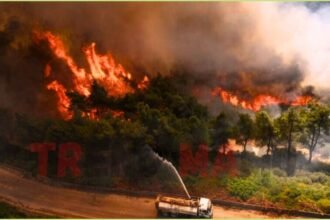
Social media footage painted a vivid picture of the aftermath. One video showed a massive fireball erupting between buildings, with thick plumes of smoke rising into the sky. The sound of panicked screams filled the air as residents grappled with the sudden violence. Another clip captured a man sprinting down a street, his face etched with fear, as others stood frozen, staring at the smoke in disbelief. The raw emotion in these videos underscored the terror felt by Sanaa’s residents as missiles rained down on their city.
Residents Recount the Horror
For those living in Sanaa, the strikes were a jarring disruption to daily life. Hussein Mohamed, a resident near the presidential palace, described the intensity of the explosions to reporters. “The sound was so loud, it felt like the ground was shaking,” he said. Nearby, in the heart of the capital, smoke was seen rising near Sabeen Square, a popular public gathering spot. The proximity of the strikes to civilian areas heightened fears among locals.

Ahmed al-Mekhlafy, another Sanaa resident, spoke of the physical impact of the attack. “The house was rocked, and the windows were shattered,” he told journalists over the phone. The force of the blasts left many in the city rattled, with the sounds of sirens and cries echoing through the streets. The targeting of critical infrastructure, such as the power plant and gas station, raised concerns about the immediate and long-term effects on the city’s residents, who already face challenges due to Yemen’s ongoing conflict.
Escalation in a Tense Conflict
The airstrikes come amid a volatile period in the region, with Israel intensifying its military actions against the Houthi rebels. The group, backed by Iran, has been engaged in a prolonged conflict with a Saudi-led coalition and has recently targeted Israel with missile attacks. Sunday’s strikes followed a Houthi missile launch toward Israel, which the group claimed was in solidarity with Palestinians in Gaza. Israel’s response has been swift, with its military focusing on weakening Houthi infrastructure.
Last week, Israel conducted strikes on Houthi-controlled energy facilities, a move it said was aimed at crippling the group’s operational capabilities. The latest attacks in Sanaa suggest a continuation of this strategy, though Israel’s silence on the matter has left room for speculation. The targeting of civilian infrastructure, such as power plants and gas stations, has drawn criticism, with fears that it could exacerbate Yemen’s already dire humanitarian situation.
Houthis Vow to Fight On
Despite the destruction, Houthi leaders remained defiant. Nasruddin Amer, deputy head of the group’s media office, issued a strong statement on social media, vowing that the attacks would not weaken their resolve. “No matter how much they bomb, we will not abandon Gaza,” Amer wrote, emphasizing the group’s commitment to supporting Palestinians. “This is a pledge we made to our people in the Strip, and we will not retreat as long as there is a drop of blood pulsing in us.”

The Houthis have repeatedly framed their actions as part of a broader resistance against Israel, aligning themselves with other Iranian-backed groups in the region. Their missile attacks on Israel, though largely intercepted, have heightened tensions and prompted retaliatory strikes. The cycle of violence shows no immediate signs of slowing, with both sides entrenched in their positions.
A City on Edge
For the people of Sanaa, Sunday’s airstrikes were a stark reminder of the ongoing conflict’s toll. The targeting of key infrastructure has raised fears of power shortages and fuel scarcity, which could further strain daily life in the capital. The emotional impact is equally profound, with residents describing a sense of helplessness as the city came under fire. The widely shared videos of smoke and chaos have brought global attention to the situation, though the authenticity of the footage has yet to be independently verified.
As the dust settles, questions remain about the next steps in this escalating conflict. Will Israel continue its campaign against the Houthis, and how will the rebels respond? For now, Sanaa’s residents are left to pick up the pieces, navigating fear and uncertainty in a city scarred by war. The international community watches closely as the region teeters on the edge of further violence.