


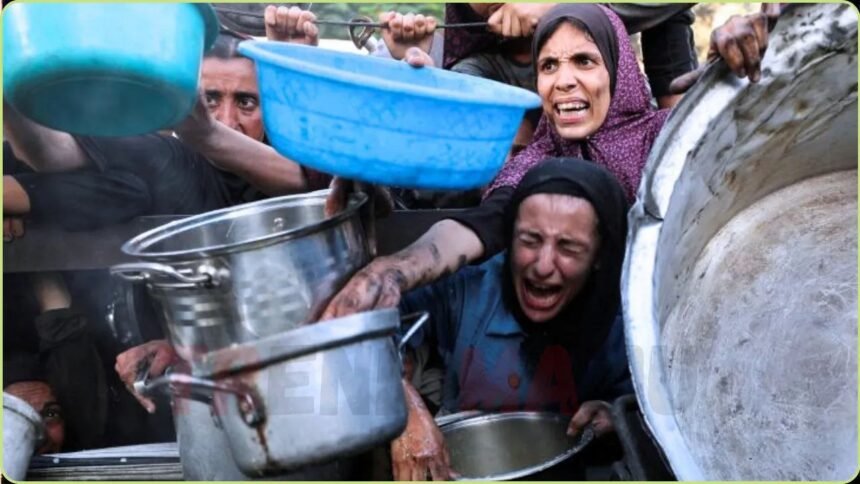
Shocking Gaza Tragedy 32 Dead as Hungry Crowds Face IDF Gunfire
On July 19, 2025, a devastating incident in southern Gaza left at least 32 Palestinians dead and over 100 injured when Israeli Defense Forces (IDF) opened fire on crowds desperately seeking food at aid distribution hubs, according to Gaza health officials and eyewitnesses.
Described as a “massacre” by those present, the violence erupted near two sites managed by the U.S.- and Israeli-backed Gaza Humanitarian Foundation (GHF) in the Teina area east of Khan Younis and northwest of Rafah. This tragedy highlights the catastrophic humanitarian crisis gripping Gaza, where 2.1 million people face famine amid ongoing conflict.
Below, we delve into the details of the incident, the chaotic aid distribution system, and the urgent need for solutions to prevent further loss of life.
Chaos and Gunfire at Aid Hubs
The violence unfolded in the pre-dawn hours of Saturday, between 5 a.m. and 6 a.m., as thousands of Palestinians, primarily young men, gathered near GHF aid hubs to secure scarce food supplies. Witnesses reported that IDF troops fired indiscriminately, with bullets striking many in the head and chest.
Mahmoud Mokeimar, a survivor, told the Associated Press, “It was a massacre. The occupation opened fire at us without warning,” describing lifeless bodies and wounded people fleeing in panic. Sana’a al-Jaberi, a 55-year-old woman, recalled shouting “food, food” only to be met with gunfire.

Tamer Abu Akar, 24, said tanks and jeeps encircled the crowd, with soldiers firing directly from machine guns and drones. Nasser Hospital in Khan Younis received 25 bodies and dozens of injured, while nine others died near Rafah, per civil defense spokesperson Mahmud Bassal. Dr. Atef al-Hout, the hospital’s director, warned that the death toll could rise due to the critical condition of many victims and the facility’s lack of equipment, medicine, and staff.
A Broken Aid System Fuels Tragedy
The GHF, established in May 2025 to replace the UN’s aid network, has been plagued by dangerous inefficiencies. Operating only four “mega-sites” compared to the UN’s 400 smaller distribution points, the GHF forces Palestinians to travel through perilous military zones for food.
Its first-come, first-served model has led to deadly rushes, with meager rations like flour and pasta sparking chaos. The UN and aid groups have called the system a “death trap,” with over 870 deaths linked to aid site incidents since May. The IDF claims it fired warning shots near Rafah after “suspects” ignored orders to stay back, denying direct civilian targeting, while the GHF insists the shootings occurred far from its sites.
However, Haaretz reported soldiers admitting to using lethal force, including grenades, on unarmed crowds. Critics, including UNRWA’s Philippe Lazzarini, argue the system prioritizes control over humanitarian relief, exacerbating Gaza’s hunger crisis and turning aid collection into a life-threatening ordeal.
Gaza’s Humanitarian Crisis Worsens
Gaza’s conflict, intensified by Hamas’s October 7, 2023, attack that killed 1,200 Israelis and took 251 hostages, has claimed over 58,000 Palestinian lives, per Gaza’s health ministry. Israel’s blockade and military operations have pushed 93% of Gaza’s population into acute food insecurity, with famine looming.
The GHF’s armed U.S. contractors and limited sites have failed to deliver safe aid, with looting and violence further complicating distribution. Recent incidents, like a deadly crush killing 19 at a GHF hub, underscore the lethal stakes of seeking food.
As ceasefire talks stall—despite U.S. President Trump’s July 18 claim of imminent hostage releases—the UN and rights groups demand investigations into these shootings as potential war crimes. The international community faces mounting pressure to restore a robust, safe aid system to avert further tragedies and address Gaza’s starvation crisis.