

Sudan Army Torture Allegations In Khartoum: Sudan’s Army Running Secret Execution Chambers, Rights Group Claims.
A leading human rights organization in Sudan has leveled serious charges against the nation’s army and security forces, claiming they are torturing detainees to death and maintaining hidden “execution chambers.” The accusations highlight a grim pattern of abuse amid the ongoing civil war that has ravaged the country for two years.
The Emergency Lawyers group, known for monitoring human rights issues, reports that it has tracked hundreds of arrests in Khartoum, the capital city. In the most severe instances, some of those taken into custody have turned up dead, showing clear signs of torture.
This comes as the Sudanese army fights a fierce battle against the paramilitary Rapid Support Forces (RSF), which it pushed out of Khartoum in March. The conflict has already claimed tens of thousands of lives, leaving communities shattered and the nation on the brink of collapse.
Efforts to get a response from the Sudanese army went unanswered over the weekend, adding to the uncertainty surrounding these claims.
Documenting Atrocities on Both Sides
The Emergency Lawyers group has been a key voice in recording violations throughout the war. They have gathered evidence of wrongdoing by both the army and the RSF, refusing to take sides in their reporting. In a recent post on the social media platform X, the group warned of a “dangerous escalation in violations,” pointing to a rise in brutal tactics that threaten civilian lives.

According to their statement, many people are being picked up at random on the streets and funneled into massive detention facilities. Once inside, detainees face a range of horrific outcomes. Some remain locked up in conditions that strip away basic human dignity overcrowded cells with little food, water, or medical care.
Others are put through sham trials run by security officials, where fairness and due process are nowhere to be found. A lucky few are eventually released, but often in broken health, scarred by their ordeal.
Tragically, the group says, the worst cases end in death. Bodies are discovered later, bearing marks of severe torture, or officials simply declare the victims dead from mistreatment. These accounts paint a picture of systematic cruelty that echoes darker chapters in Sudan’s history.
Echoes of a Brutal Past
Torture has long been a tool of control in Sudan. During the three-decade rule of former president Omar al-Bashir, who was ousted in 2019, security forces routinely used it to silence dissent and maintain power.
Bashir’s regime was marked by widespread repression, including arbitrary arrests and extrajudicial killings, which left deep scars on the population. Many hoped the end of his era would bring change, but the current war has revived these old horrors.
It’s not just the army under fire. The RSF, a powerful paramilitary group that grew out of militias in Darfur, has also been implicated in abusing and executing prisoners. Reports from various sources describe RSF fighters detaining civilians, subjecting them to beatings, and in some cases, carrying out summary executions. This mutual brutality has turned the conflict into a cycle of revenge, where neither side shows mercy.

International Scrutiny and Findings
The international community has taken note of these abuses. In March, the United Nations Independent International Fact-Finding Mission for Sudan released a report that condemned both warring parties. It detailed a “widespread pattern of arbitrary detention, torture, and ill-treatment of detainees.” The mission found evidence that the army and RSF have used rape and other forms of sexual violence as weapons, alongside random arrests and cruel handling of captives.
These findings underscore how the war has eroded the rule of law. Civilians caught in the crossfire often have no recourse, as courts and oversight bodies are either overwhelmed or aligned with one side. The UN’s call for accountability has so far gone unheeded, but it serves as a reminder that the world is watching. Efforts to broker peace talks have stalled, with both factions prioritizing military gains over dialogue.
The broader impact of this violence cannot be overstated. What started as a power struggle between army leader Abdel Fattah al-Burhan and RSF commander Mohamed Hamdan Dagalo has spiraled into a nationwide catastrophe. Cities like Khartoum, once bustling hubs of commerce and culture, now resemble ghost towns, riddled with checkpoints and rubble from airstrikes and artillery fire.
A Humanitarian Disaster of Epic Proportions
The fighting has triggered one of the planet’s most severe humanitarian emergencies. Over 12 million people roughly a quarter of Sudan’s population have been displaced from their homes. Many have fled to neighboring countries like Egypt, Chad, and South Sudan, straining resources there. Inside Sudan, millions more are internally displaced, living in makeshift camps where disease and hunger are constant threats.
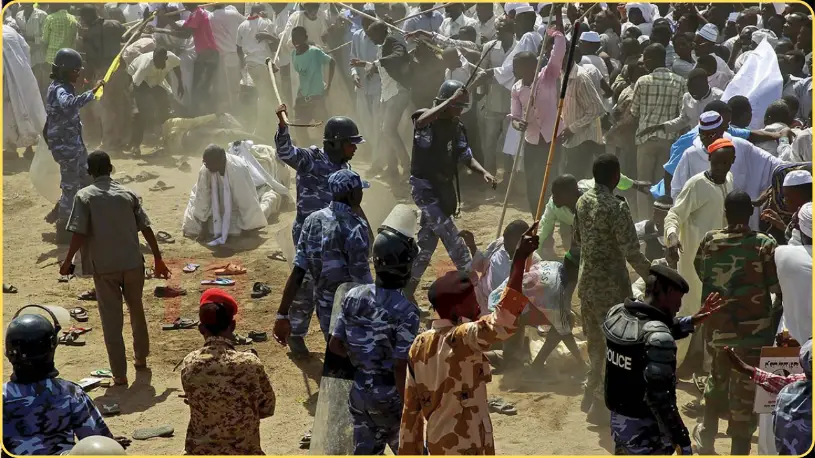
In a stark development, famine has been officially declared in several regions. Aid workers describe scenes of desperation: families scavenging for food, children too weak to cry. The war has disrupted farming, blocked supply routes, and destroyed markets, making it impossible for people to access basic necessities. International aid groups are racing to deliver help, but ongoing clashes often force them to suspend operations.
Adding to the misery, the conflict has sparked a massive health crisis. Last week, the medical aid organization Doctors Without Borders highlighted the country’s worst cholera outbreak in years. Driven by contaminated water, poor sanitation, and overcrowded living conditions, the disease has spread rapidly.
Official figures show nearly 100,000 cases and 2,470 deaths in the past year alone. Cholera, a preventable illness, thrives in chaos like this, where hospitals are bombed, doctors are fleeing, and vaccines are in short supply.
The outbreak is just one symptom of a collapsing health system. Malnutrition weakens immune systems, making people more vulnerable to infections. Without urgent intervention, experts warn that the death toll from disease could rival that from direct violence.
As Sudan grapples with these overlapping crises, the Emergency Lawyers group’s latest report serves as a urgent call to action. It reminds us that behind the statistics are real people families torn apart, futures destroyed.
While peace remains elusive, holding those responsible for torture and killings accountable could be a step toward healing. For now, the world must keep pressure on both sides to end the suffering and allow aid to flow freely.