


Massive 8.8 Earthquake Sparks Tsunami Panic Across Pacific: Evacuations in Hawaii, Japan, and More 8.8 Quake Triggers Tsunami Chaos: Hawaii Evacuates, U.S. West Coast Braces for Monster Waves!
A colossal 8.8-magnitude earthquake struck off Russia’s Kamchatka Peninsula on July 29, 2025, unleashing tsunami warnings across the Pacific, from the U.S. West Coast to Japan, Hawaii, Alaska’s Aleutian Islands, Guam, and Ecuador.
The shallow quake, one of the strongest ever recorded, has prompted urgent evacuations in coastal areas, with Honolulu’s O’ahu residents fleeing to higher ground and Japan reporting initial waves hitting Hokkaido.
Authorities warn of potentially destructive waves up to 10 feet high, threatening lives and property across multiple regions. This article explores the earthquake’s impact, the ongoing tsunami threat, and the global response to this seismic crisis.
A Monster Quake Rocks the Pacific
The earthquake hit at 7:24 p.m. ET (1:24 p.m. HST) on July 29, centered 78 miles east-southeast of Petropavlovsk-Kamchatsky, Russia, at a depth of just 11 miles, making it particularly dangerous for generating tsunamis. The U.S. Geological Survey initially reported it as an 8.0, later upgrading it to 8.8, tying it for the sixth-strongest quake in history.
At least six aftershocks, ranging from 5.4 to 6.9 in magnitude, rattled the region, heightening fears of further seismic activity. Kamchatka, part of the Pacific Ring of Fire, is no stranger to earthquakes, but this event, the largest since the 2011 Japan quake, has caused widespread alarm.
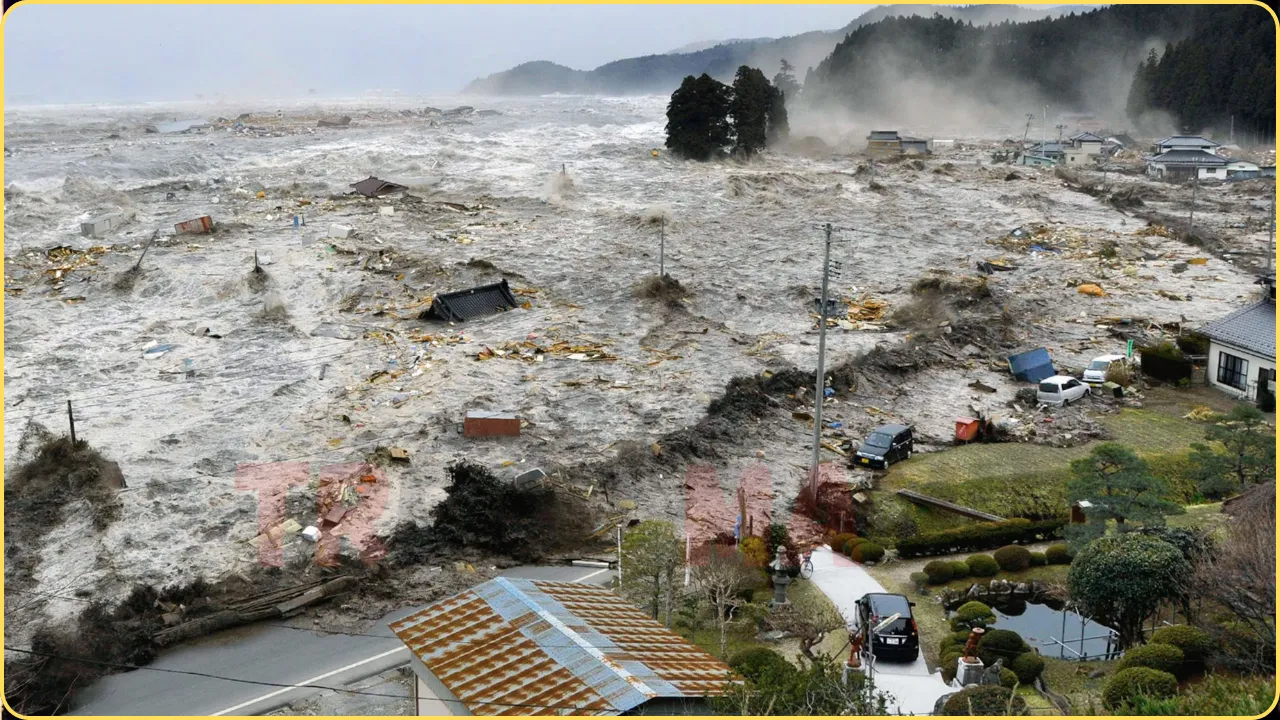
In Russia, waves up to 13 feet flooded parts of Severo-Kurilsk, damaging buildings and forcing evacuations, though no serious injuries have been reported. The quake’s shallow depth and proximity to the coast amplified its tsunami-generating potential, putting millions at risk across the Pacific.
Tsunami Warnings and Evacuations
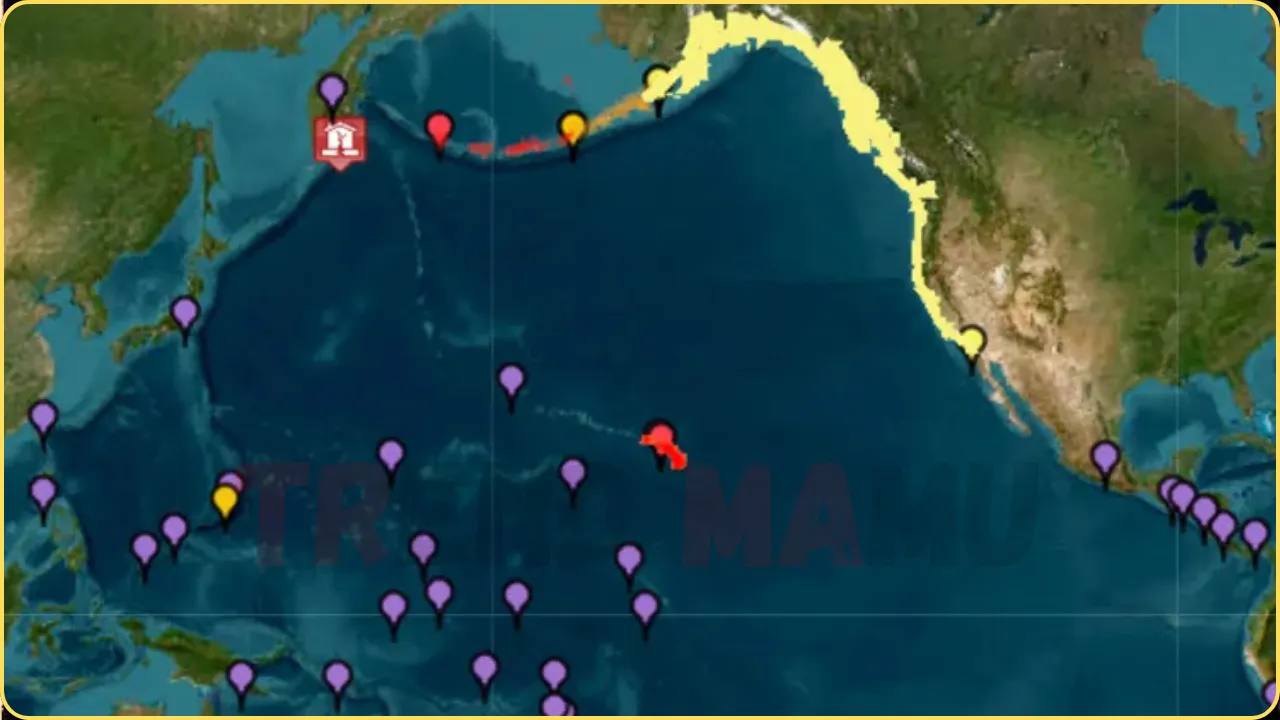
The Pacific Tsunami Warning Center confirmed a tsunami was generated, with waves already striking Hokkaido, Japan, at 30 cm (11 inches), sweeping structures inland. Japan’s Meteorological Agency warned of waves up to 10 feet hitting coastal areas from Hokkaido to Wakayama, urging immediate evacuations to high ground or safe buildings. In Hawaii, sirens blared across all islands, with O’ahu’s Emergency Management ordering coastal evacuations around Honolulu, expecting waves as early as 7:17 p.m. HST.
Traffic jammed highways as residents fled, and schools canceled activities despite the summer break. Alaska’s Aleutian Islands, including Shemya and Adak, face warnings, with potential waves of 3-9 feet. The U.S. West Coast, including California, Oregon, and Washington, is under a tsunami advisory, with expected wave heights of 1-5.7 feet in areas like Crescent City.
British Columbia, Guam, Ecuador, and other Pacific nations like Chile and the Philippines are also on alert, with Ecuador facing waves over 10 feet. New Zealand warned of dangerous currents without ordering evacuations.
Global Response and Ongoing Risks
Authorities across affected regions are mobilizing to protect lives. In Hawaii, Honolulu’s mayor urged calm but swift action, with emergency centers activated and coastal roads like Hanalei Bridge partially closed for evacuations. Japan’s government formed an emergency task force, recalling the 2011 tsunami’s devastation, which killed over 15,000.
Russia’s Kamchatka governor called it the region’s strongest quake in decades, with minor injuries reported from panic-driven incidents. The U.S. National Weather Service emphasized that tsunami waves can wrap around islands, endangering all shores, and subsequent waves may be larger than the first.
Residents are urged to stay off beaches and avoid observing waves, as dangers could persist for hours. This event, compared to historic quakes like the 1960 Chile 9.5-magnitude disaster, underscores the Pacific’s volatility. As monitoring continues, the world watches anxiously, hoping evacuations and preparedness prevent a repeat of past tragedies.