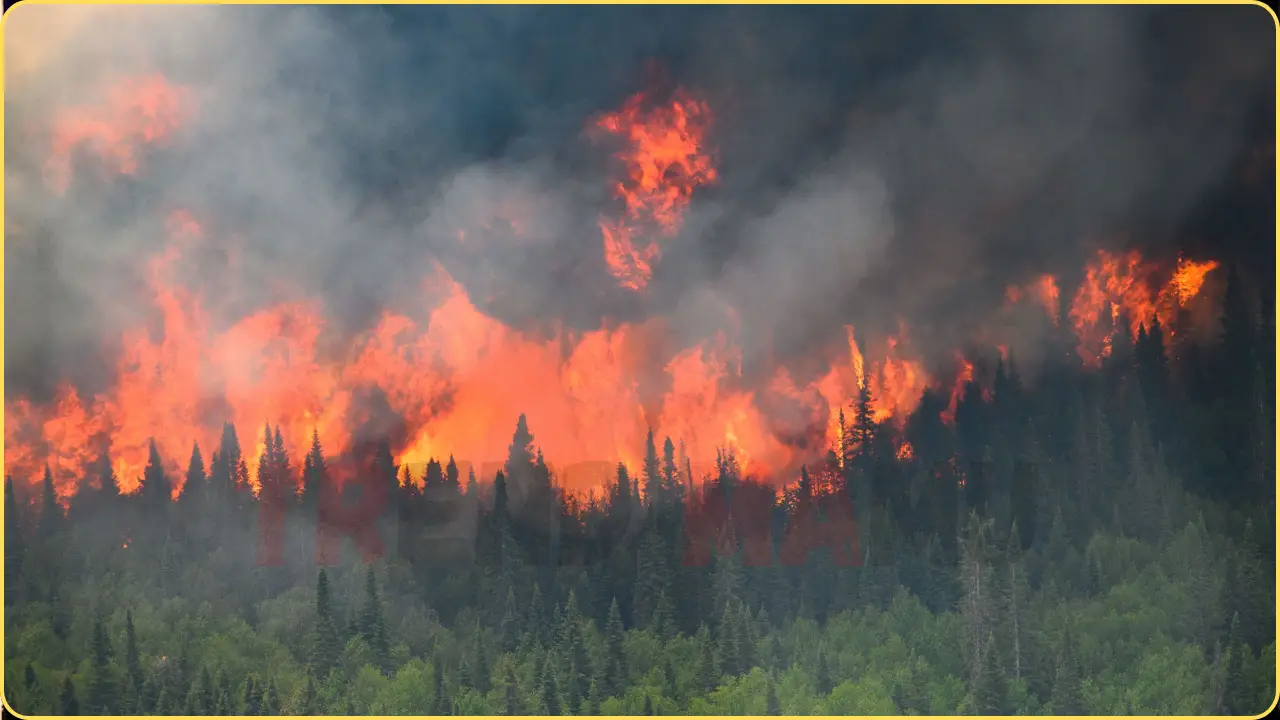
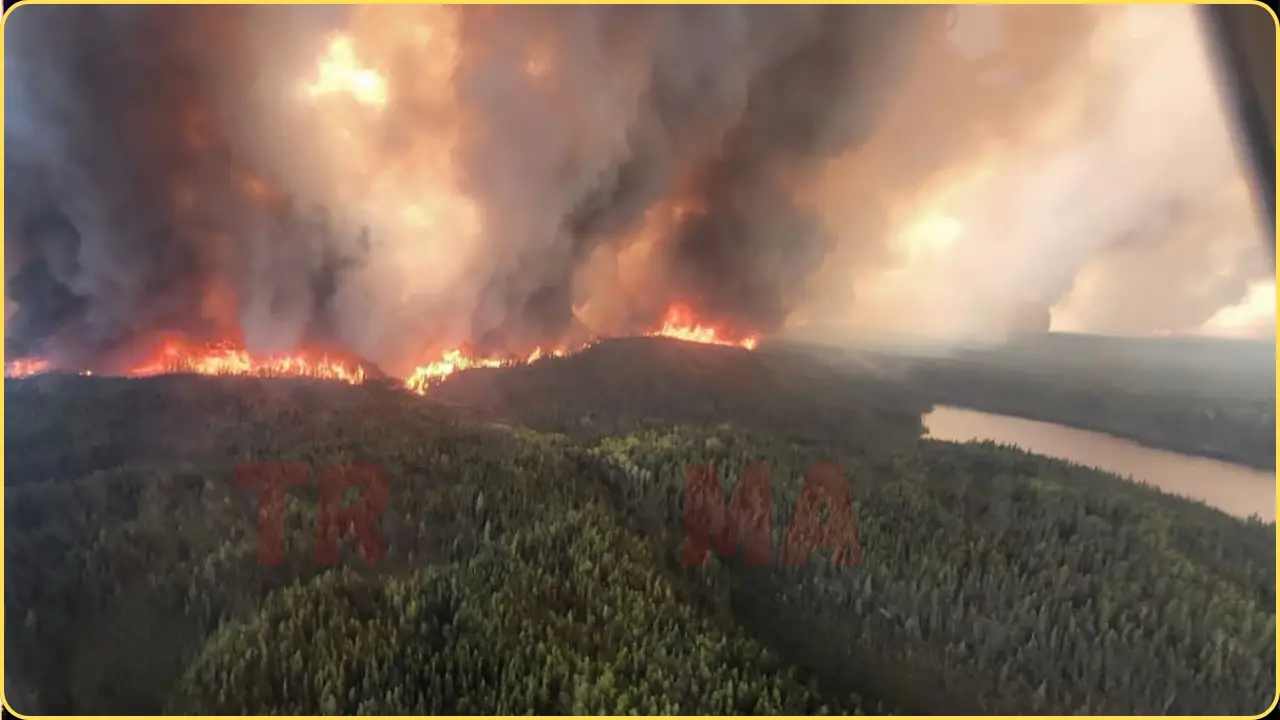
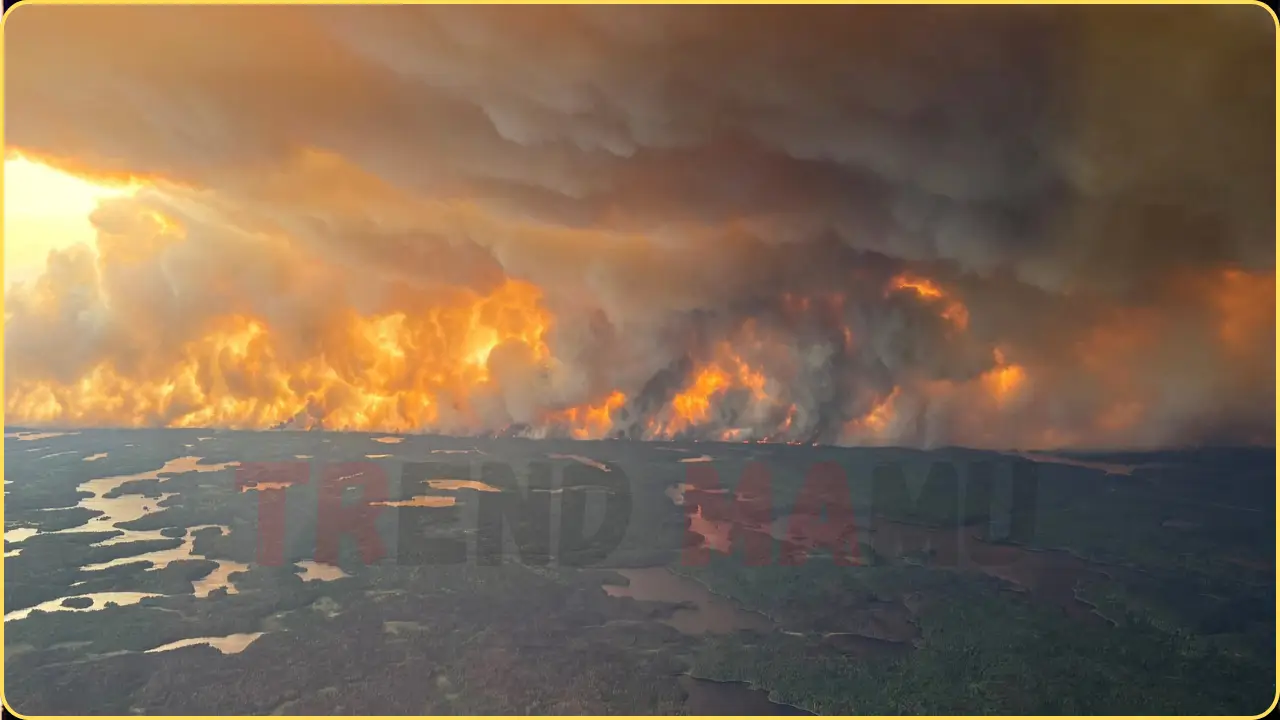
Canada is grappling with an unprecedented wildfire crisis in 2025, marking the second-worst fire season in the nation’s history. With over 470 fires raging out of control and millions of hectares scorched, experts warn that climate change is fueling a “new reality” of longer, more destructive fire seasons.
The blazes have forced mass evacuations, blanketed communities in smoke, and sent air quality plummeting across borders, raising urgent questions about how Canada and the world will adapt to this escalating threat.
A Devastating Toll on Land and Communities
According to the Canadian Interagency Forest Fire Centre (CIFFC), wildfires have consumed 7,318,421 hectares of land this year—nearly 78% more than the five-year average of 4,114,516 hectares. This staggering figure places 2025 just behind the catastrophic 2023 season, which saw 17,203,625 hectares burned.
The fires, classified as “out of control” in 470 locations, have left a trail of destruction, particularly in the prairie provinces of Saskatchewan and Manitoba, which account for roughly 60% of the burned areas.
Canada Wildfire
The human impact is equally severe. Tens of thousands of Canadians have been forced to flee their homes. In Saskatchewan alone, the Canadian Red Cross has assisted over 17,000 people from 6,700 households with evacuations. Thirteen communities in northwest Saskatchewan, including several First Nations, remain under evacuation orders.
The village of Denare Beach in northeastern Saskatchewan was nearly wiped out by a June blaze, highlighting the fires’ devastating reach. On Canada’s east coast, Newfoundland and Labrador are now battling their own wildfires, with several towns under evacuation alerts.
Climate Change: The Driving Force Behind the Flames
Scientists point to climate change as a key driver of this year’s ferocious fire season. A June report from United Nations University in Shibuya, Japan, described the fires as a “stark manifestation” of global warming. Warm, dry spring weather, with temperatures 2.5°C above average, created ideal conditions for fires to ignite and spread. Mike Flannigan, a fire science expert at Thompson Rivers University in Kamloops, explained that warmer temperatures extend the fire season and increase lightning strikes, which spark many blazes.
Canada Wildfire
A hotter climate also dries out vegetation, turning forests and grasslands into tinderboxes. “The warmer it gets, the more fires we see,” Flannigan said. “Dried-out material fuels bigger flames and higher-intensity fires that are nearly impossible to extinguish.” This cycle of heat, drought, and fire is becoming Canada’s “new reality,” he warned, urging communities to brace for more frequent and severe wildfire seasons.
Smoke and Cross-Border Impacts
The wildfires’ effects extend far beyond Canada’s borders. Thick smoke has drifted into the United States, triggering severe air quality warnings in several states. John Abatzoglou, a professor at the University of California, Merced, and co-author of the United Nations University report, noted that this year marks the third consecutive season of above-average fire activity in Canada. The cascading smoke is disrupting quality of life and posing health risks, from respiratory issues to increased mortality rates.
Canada Wildfire
Unlike other natural disasters, wildfires’ smoke can affect populations far from the flames. “This is a unique challenge,” Abatzoglou said. “It impacts everything from daily life to long-term health.” He emphasized the need for governments to adapt public health policies to address “smoke days,” when people must stay indoors to avoid harmful air quality. Communities without robust air filtration systems are particularly vulnerable, underscoring the need for better resources to protect residents during these periods.
Adapting to a Fiery Future
As Canada confronts this escalating crisis, experts are calling for proactive measures. Public health officials must develop strategies to help communities cope with smoke exposure, such as improving indoor air quality and providing safe spaces during severe fire events. Governments also face the challenge of rethinking land management and fire prevention policies to mitigate future risks.
The 2025 wildfire season is a sobering reminder of the growing threat posed by climate change. With fires burning hotter, longer, and more frequently, Canada must act swiftly to protect its people, land, and neighbors from the far-reaching consequences of this “new reality.”