


Kiruna Church Relocation: Historic Swedish Church Embarks on Epic 5km Journey to New Home.!
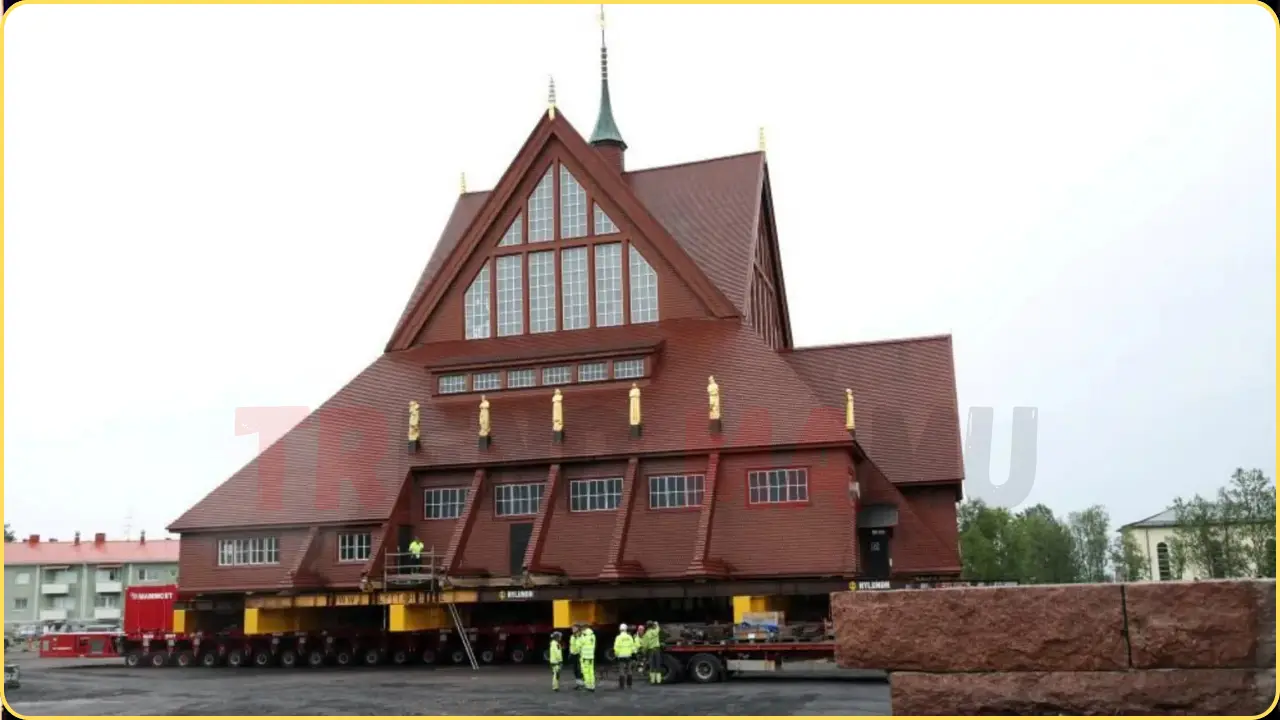
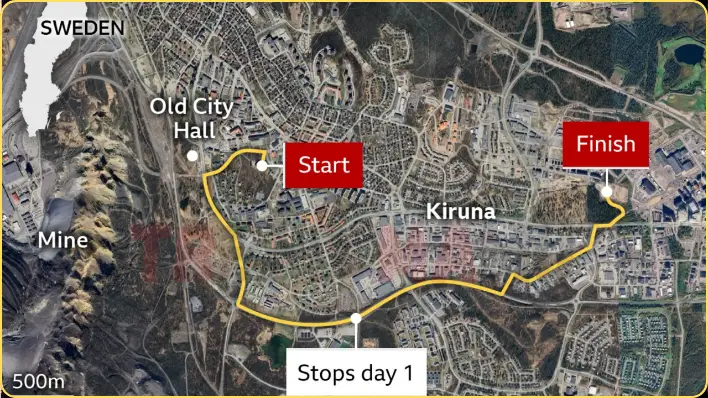
In an extraordinary feat of engineering and community spirit, a 113-year-old church in Kiruna, Sweden, is being relocated 5km (3 miles) to a new city center to escape the dangers of ground subsidence caused by decades of iron ore mining.
This iconic red timber structure, a beloved landmark since its construction in 1912, is being carefully transported on giant rolling platforms in a move that symbolizes both progress and preservation for the Arctic city. The journey, expected to take two days at a cautious speed of 500 meters per hour, has captured the imagination of residents and onlookers worldwide.
A City on the Move
Kiruna, located 145km north of the Arctic Circle, has been grappling with the consequences of over a century of iron ore mining. The ground beneath the old city center is fracturing, threatening the stability of buildings and infrastructure.
While most structures in Kiruna have been demolished and rebuilt elsewhere, a select few, including the historic Kiruna Church, are being relocated intact. This church, once voted Sweden’s most beautiful pre-1950 building, is the centerpiece of a broader relocation effort that began in the mid-2010s.
The mining company LKAB, Kiruna’s largest employer, is funding the city’s transformation, with costs exceeding 10 billion Swedish krona ($1 billion; £737 million). Swedish law prohibits mining directly beneath buildings, and as fissures in the ground threaten water, electricity, and sewage systems, the relocation of key structures has become essential. “There’s no risk of people falling through cracks,” says Robert Ylitalo, CEO of Kiruna’s development company. “But fissures would eventually damage critical infrastructure. People have to move before it fails.”
Engineering a Historic Relocation
The logistics of moving a 672-tonne, 35-meter-high, and 40-meter-wide church are nothing short of monumental. Instead of dismantling the structure, engineers have opted to transport it in one piece using self-propelled modular transporters supported by steel beams.
“The biggest challenge was preparing the road for such a wide building,” explains project manager Stefan Holmblad Johansson. The route has been widened to 24 meters (79 feet), with lampposts, traffic lights, and even a bridge removed to accommodate the church’s journey.
Inside the church, delicate treasures like the great altar painting by Prince Eugen, a member of Sweden’s royal family, and an organ with 1,000 pipes are being carefully protected. “The painting is glued directly onto a masonry wall, so removing it would risk damage,” Johansson notes.
“It will stay in place, fully covered and stabilized, along with the organ.” Years of meticulous planning have ensured that every detail, from road preparation to the protection of the church’s interior, has been accounted for. “It’s a complex operation with no margin for error, but everything is under control,” Johansson adds confidently.
A Symbol of Community and Memory
For the people of Kiruna, the church’s relocation is far more than a logistical challenge—it’s a deeply emotional milestone. “The church has been a spiritual center and gathering place for generations,” says Sofia Lagerlöf Määttä, a culture strategist who recalls her childhood visits to the church with her grandmother. “The move brings back memories of joy and sorrow, and we’re carrying those memories into the future.”
The sentiment is echoed by Johansson, who, in addition to his role as project manager, is a member of the church’s gospel choir. “This is a special task for me,” he says. “The church was built over a century ago for the community by LKAB, and now we’re moving it to the new city. It’s the only way forward.” For vicar Lena Tjärnberg, the move is bittersweet. “The church is leaving a place where it truly belongs,” she says. “We depend on the mine, and I’m grateful we’re bringing the church to the new city center, but there’s sorrow in leaving its original ground.”
A Spectacle for All to Witness
As the church begins its slow journey, thousands of residents and visitors, including Sweden’s King Carl Gustaf, are expected to line the route to witness this historic event. Swedish television will broadcast the move live as “slow TV,” offering viewers a front-row seat to a rare moment when a piece of history is preserved through innovation.
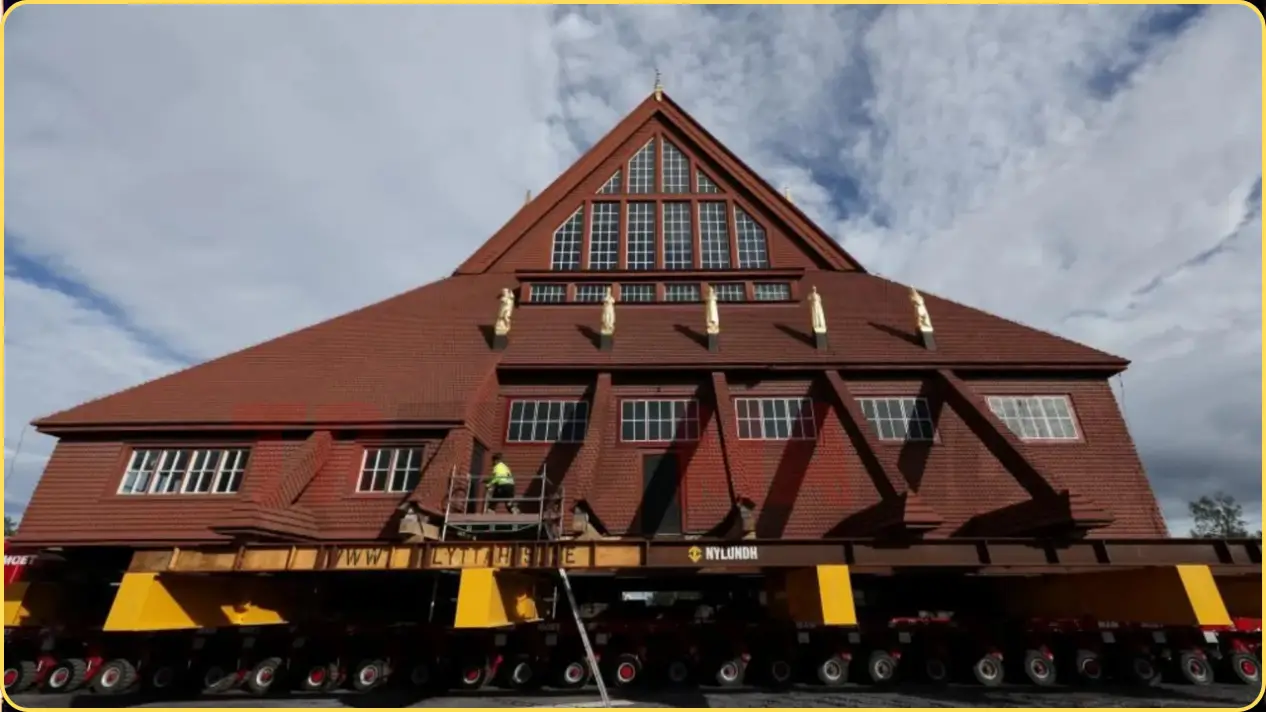
The relocation of Kiruna Church is not just about saving a building; it’s about safeguarding a community’s heritage and identity in the face of inevitable change.
The move marks a significant chapter in Kiruna’s transformation, with other landmarks like the yellow row of houses and the former home of mining manager Hjalmar Lundbohm already relocated.
The clock tower from the old city hall now stands proudly beside the new one, a testament to the city’s commitment to blending the old with the new. As Kiruna adapts to the challenges of its mining legacy, the church’s journey serves as a powerful symbol of resilience, community, and hope for the future.
A New Chapter for Kiruna
The relocation of Kiruna Church is a remarkable blend of engineering prowess and emotional significance. For a city defined by its mining heritage, the move represents both the challenges and opportunities of progress.
As the church inches toward its new home, it carries with it the stories, memories, and spirit of a community determined to preserve its past while embracing the future. For the people of Kiruna, this is more than a relocation it’s a journey of heart and history.