




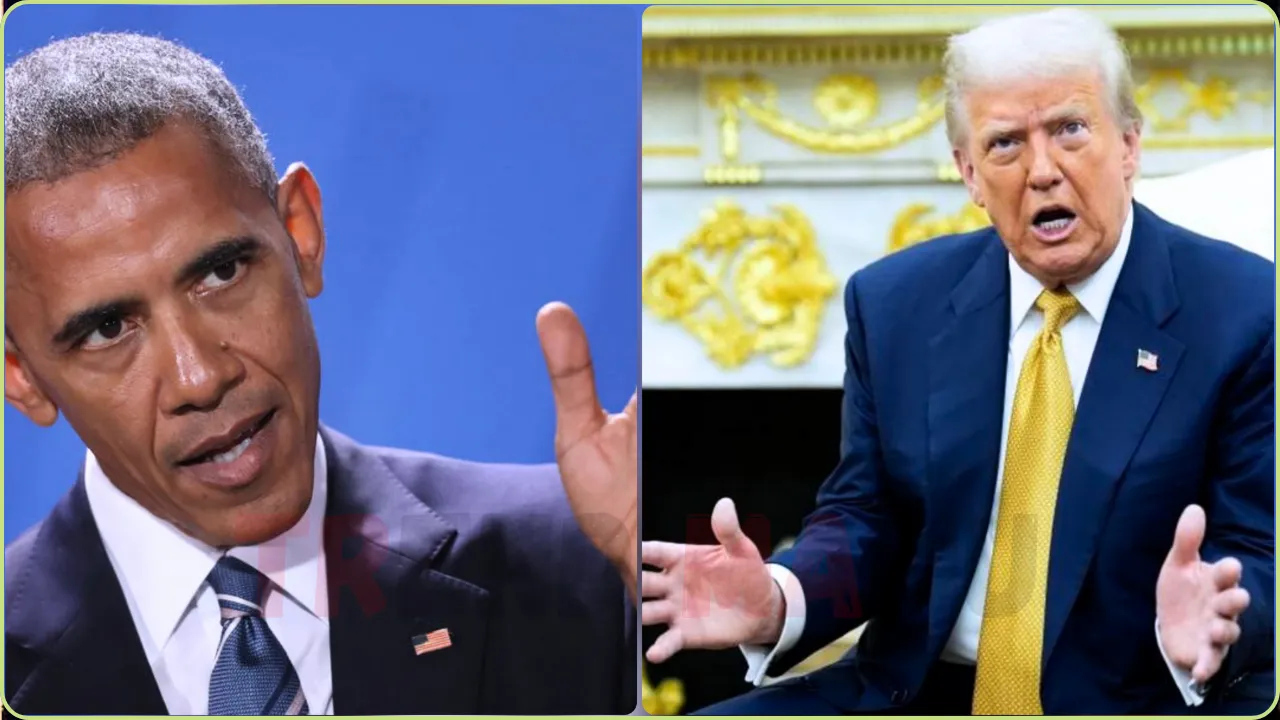
Obama Slams Trump Outrageous Treason Claims as Political Distraction.
Former President Barack Obama has publicly rebuked President Donald Trump’s shocking accusations that he orchestrated a “coup” to undermine the 2016 election. In a rare statement, Obama’s office dismissed Trump’s claims as “ridiculous” and a “weak attempt at distraction,” breaking from tradition to address what they called “outrageous” allegations.
The controversy stems from a report by Director of National Intelligence Tulsi Gabbard, accusing Obama-era officials of manipulating evidence of Russian interference in the 2016 election. This escalating political firestorm has reignited debates about the integrity of past elections and the motives behind Trump’s latest attacks. Here’s a closer look at the unfolding drama and its implications.
Obama’s Office Responds to Trump’s Allegations
On July 23, 2025, Obama’s office issued a strongly worded statement, a departure from its usual practice of avoiding responses to White House rhetoric. The statement addressed Trump’s claims that Obama led a “treasonous” effort to fabricate Russian interference in the 2016 election, which Trump won against Hillary Clinton.
Speaking to reporters during a meeting with Philippine President Ferdinand Marcos Jr., Trump accused Obama of heading a conspiracy involving former FBI Director James Comey, former Director of National Intelligence James Clapper, and others. “It was them, too, but the leader of the gang was President Obama,” Trump declared, calling the alleged actions “sedatious” and “treason.”
Obama’s office countered, “Out of respect for the office of the presidency, our office does not normally dignify the constant nonsense and misinformation flowing out of this White House with a response. But these claims are outrageous enough to merit one.”
The statement labeled Trump’s accusations as baseless and criticized an 11-page report by Gabbard, which alleged a “treasonous conspiracy” among Obama’s national security team. The report, according to Obama’s office, misrepresents facts to discredit the widely accepted finding that Russia sought to influence the 2016 election without altering vote counts.
The Gabbard Report and Its Controversies
The controversy centers on Gabbard’s report, released last week, which claims Obama administration officials pressured intelligence agencies to falsify conclusions about Russian interference. The report suggests these actions were part of a broader effort to undermine Trump’s 2016 victory.
However, critics, including Obama’s office, argue that Gabbard’s document distorts evidence. It conflates the absence of Russian cyberattacks on vote tallies with the broader issue of influence operations, such as the hacking and leaking of Democratic National Committee documents to harm Clinton’s campaign.
These findings were substantiated by multiple sources, including the 2019 Mueller Report and a 2020 bipartisan Senate Intelligence Committee report led by then-Chairman Marco Rubio, now Trump’s Secretary of State. Obama’s office emphasized, “Nothing in the document issued last week undercuts the widely accepted conclusion that Russia worked to influence the 2016 presidential election but did not successfully manipulate any votes.” Former CIA analyst Fulton Armstrong called Gabbard’s report “amateurish” and manipulative, noting its reliance on “crappy precedents” and “sloppiness” to push a predetermined narrative.
Political Motives and Distraction Tactics
The timing of Trump’s accusations has raised questions about his motives. Some observers see the claims as an attempt to shift focus from ongoing demands for transparency in other controversies, such as the unreleased Jeffrey Epstein files.
Trump hinted at this during his remarks, urging supporters to “stop talking about nonsense” and focus on Gabbard’s report, which he claimed contains “thousands of additional documents” proving Obama’s guilt. Critics argue this is a calculated move to deflect attention from issues plaguing his administration, including public pressure to release Epstein-related documents.
The political fallout has been swift, with Obama’s response intensifying scrutiny of Trump’s claims. The former president’s decision to break his silence underscores the gravity of the accusations, which challenge the credibility of intelligence assessments and the bipartisan consensus on Russian interference. The Senate Intelligence Committee’s 2020 report, led by Rubio, affirmed Russia’s efforts to sway the election, contradicting Gabbard’s narrative and highlighting inconsistencies in her report.
Implications for Political Discourse
This clash between two former presidents reflects deeper divisions in American politics. Trump’s inflammatory rhetoric, accusing Obama of “treason” and a “coup,” risks further polarizing the public and undermining trust in institutions. The Gabbard report’s reliance on selective evidence has drawn criticism from intelligence experts like Armstrong, who warned that its “pre-ordained conclusion” could fuel misinformation. The report’s reference to “deep state officials” has also been mocked as unprofessional, weakening its credibility.
For Obama, the decision to respond publicly signals a shift from his typically reserved approach, highlighting the need to counter what he sees as dangerous falsehoods. The controversy also places Rubio in an awkward position, as his 2020 Senate report directly contradicts the claims now pushed by Gabbard under Trump’s administration. As the debate unfolds, it raises questions about how political leaders navigate truth, accountability, and public trust in a polarized era.
What Lies Ahead.?
The feud between Trump and Obama is unlikely to fade soon, with Gabbard’s report promising more documents and potential legal actions. The Justice Department, now tasked with Facet with investigating Gabbard’s claims, may face pressure to deliver answers, but the broader issue of Russian interference remains a contentious topic. Obama’s forceful rebuttal has set the stage for further political sparring, as both sides dig in over the 2016 election’s legacy.
This saga underscores the enduring impact of past elections on current politics and the challenges of combating misinformation. As investigations and debates continue, the public is left to grapple with competing narratives, seeking clarity in a complex and divisive political landscape.