




Tragic Train Crash in Denmark: One Dead, Several Injured After Collision with Tanker
A devastating accident in southern Denmark has left one person dead and several others injured after a passenger train collided with a slurry tanker and derailed. The crash, which occurred at a railway crossing, disrupted travel and shocked local communities.
Emergency services rushed to the scene, where dramatic images showed a train carriage tipped over and passengers gathered along the tracks. As investigations begin, the incident raises questions about safety at level crossings and the impact on those involved.
Collision at a Southern Jutland Crossing
The accident took place between the towns of Tinglev and Kliplev in southern Jutland, near Denmark’s border with Germany. According to police, the train struck a slurry tanker a vehicle used to transport liquid manure at a level crossing, causing the train to derail.

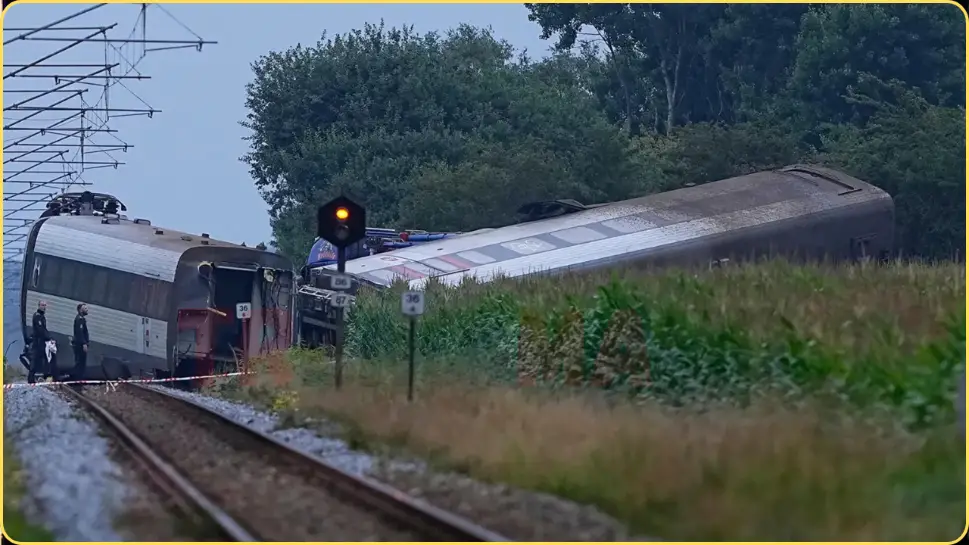
The force of the collision was significant, with at least two carriages veering off the tracks. One carriage was left lying on its side, a stark image of the crash’s severity. Authorities quickly cordoned off the area, and police confirmed they were on-site to manage the situation and investigate the cause.
The train, operated by Denmark’s national rail company DSB, was carrying 95 passengers, including a group of schoolchildren from Sønderborg. The presence of young passengers added to the urgency of the rescue efforts.
Emergency response teams, including helicopters, were deployed to assist the injured. Two of the injured passengers were airlifted to safety, highlighting the seriousness of their conditions. While the exact number of injuries was not disclosed, officials confirmed that several people required medical attention.
Emergency Response and Passenger Impact
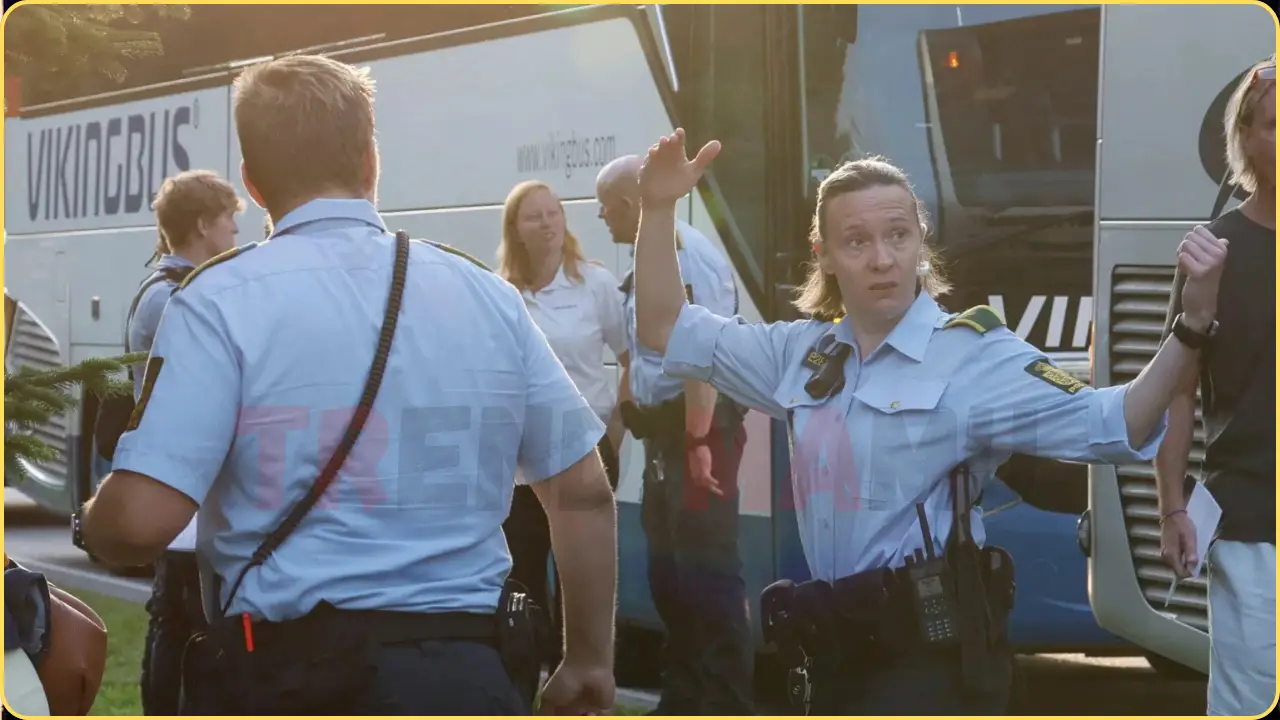
Helicopters circled the crash site as emergency crews worked to secure the area and assist passengers. Images from the scene captured the chaos, with passengers standing near the derailed train, some visibly shaken.
The overturned carriage and scattered debris underscored the violence of the collision. For the schoolchildren on board, the experience was likely terrifying, though authorities have not released details about their condition.
DSB, the rail operator, announced that train services between Tinglev and Sønderborg were suspended to allow for rescue operations and an investigation. The disruption affected travel in the region, leaving passengers stranded and forcing authorities to arrange alternative transport.
The national rail agency, Banedanmark, confirmed the collision occurred at a railway crossing, a detail that has raised concerns about safety measures at such intersections. Level crossings, where roads and rail lines meet, are known to be high-risk areas for accidents if proper precautions are not in place.
Questions Surrounding Safety
The crash has sparked discussions about the safety of railway crossings in Denmark, particularly in rural areas like southern Jutland. While investigations are underway to determine the exact cause of the collision, early reports suggest the slurry tanker was crossing the tracks when the train approached.
Questions remain about whether warning signals, barriers, or other safety systems were functioning correctly. Local media reported that rail officials are cooperating with police to piece together the sequence of events and assess any potential failures in infrastructure or protocol.
For the community, the loss of one life and injuries to others have cast a shadow over the region. The incident serves as a sobering reminder of the risks associated with rail travel, especially in areas where trains and vehicles share crossings. As authorities work to restore services and support those affected, the focus will likely turn to preventing similar tragedies in the future.
A Community in Mourning
The derailment has left a mark on southern Denmark, where residents and officials are grappling with the aftermath. With investigations ongoing and rail services disrupted, the region faces a challenging recovery.
The loss of life and the injuries sustained highlight the human cost of such accidents, prompting calls for improved safety measures to protect passengers and prevent future collisions.