




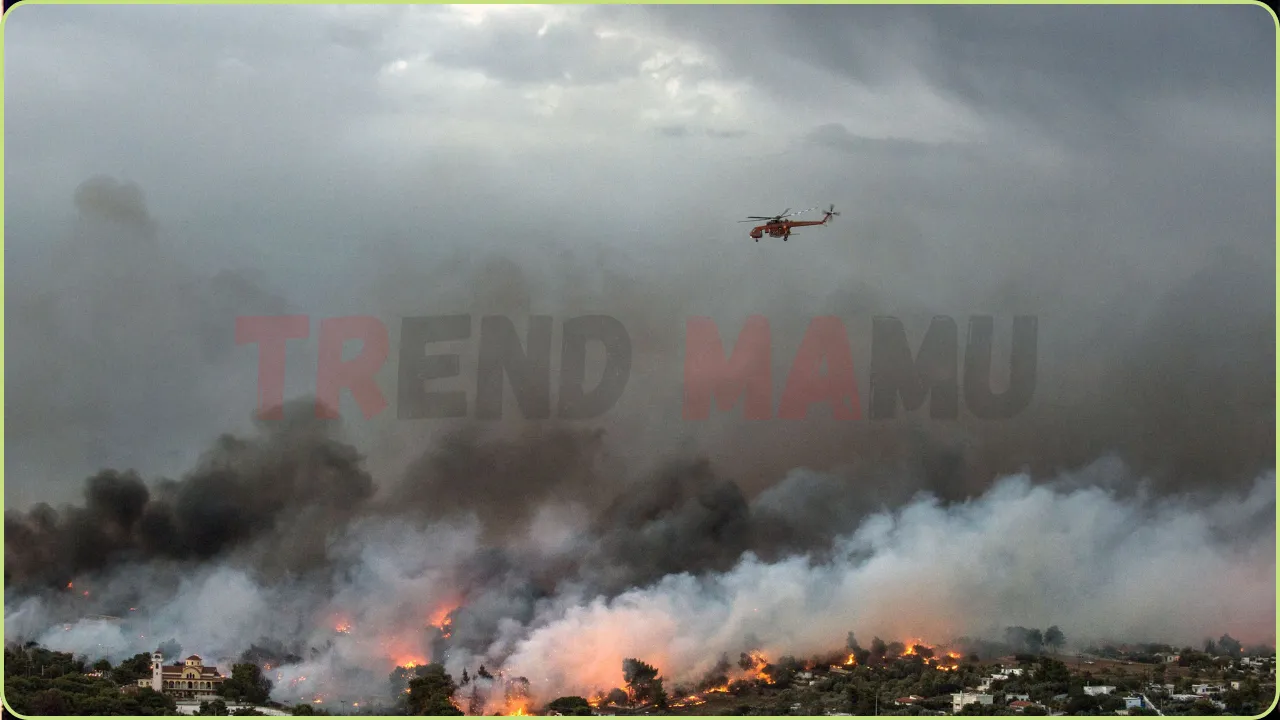
Wildfire Devastates Kryoneri Near Athens, Forcing Mass Evacuations.
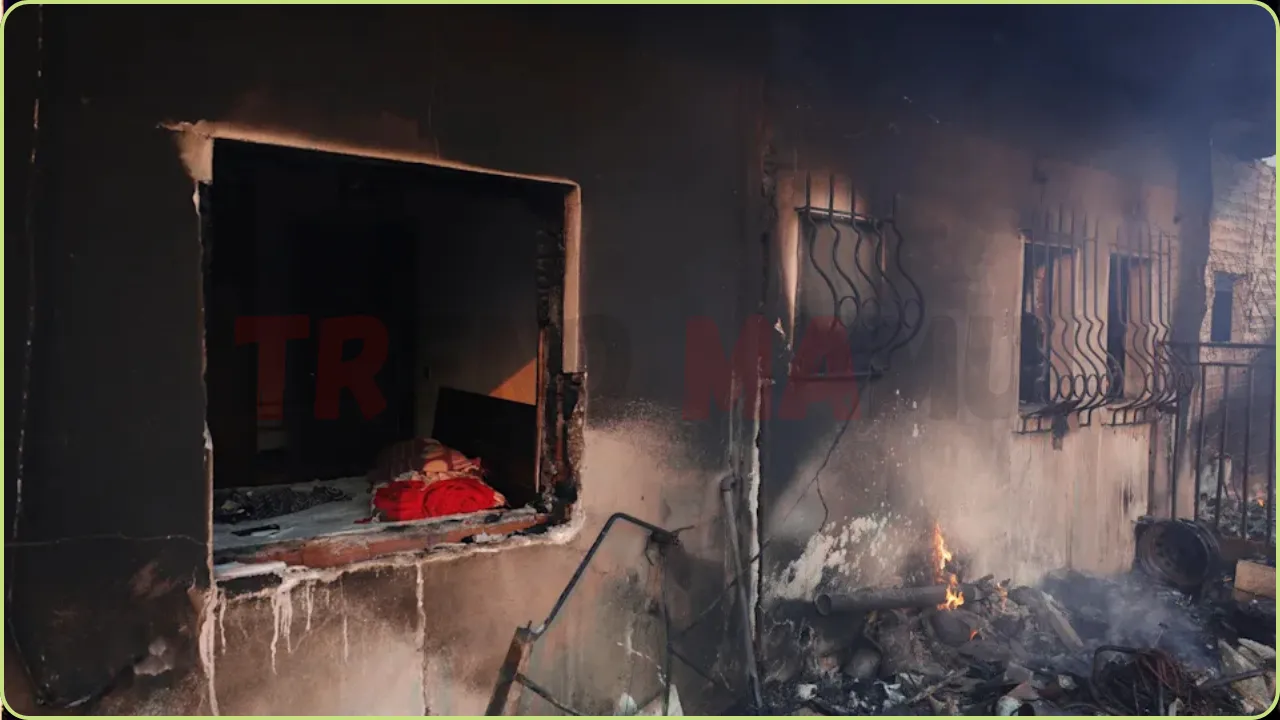
On July 26, 2025, a rapidly spreading wildfire engulfed Kryoneri, a suburb 20 km (12.5 miles) northeast of Athens, prompting the evacuation of approximately 5,000 residents via three emergency SMS alerts from Greece’s 112 system. Fueled by extreme heat of 38–45°C (100–113°F), dry conditions, and gale-force winds, the blaze destroyed homes, vehicles, and businesses, with explosions reported from industrial sites.
Firefighting efforts, involving 145 firefighters, 44 fire engines, 10 planes, and 7 helicopters, were hindered by intense weather, leading Greece to request six additional aircraft from the EU’s RescEU mechanism. This article details the Kryoneri crisis, its impact, and Greece’s broader wildfire challenges, based on official reports and regional context.
Kryoneri Fire: Destruction and Response
The fire, ignited around 3:25 p.m. near Drosopigi at Mount Parnitha’s foothills, tore through a mixed forest-residential area, setting homes ablaze and triggering explosions in factories and boilers. Residents were directed to evacuate toward Athens or Afitnes, with some, including an elderly man, initially resisting. Police, including specialized units, rescued 27 people, while five individuals—four with respiratory issues and one firefighter with burns—were hospitalized at facilities like Agia Olga and Evangelismos.
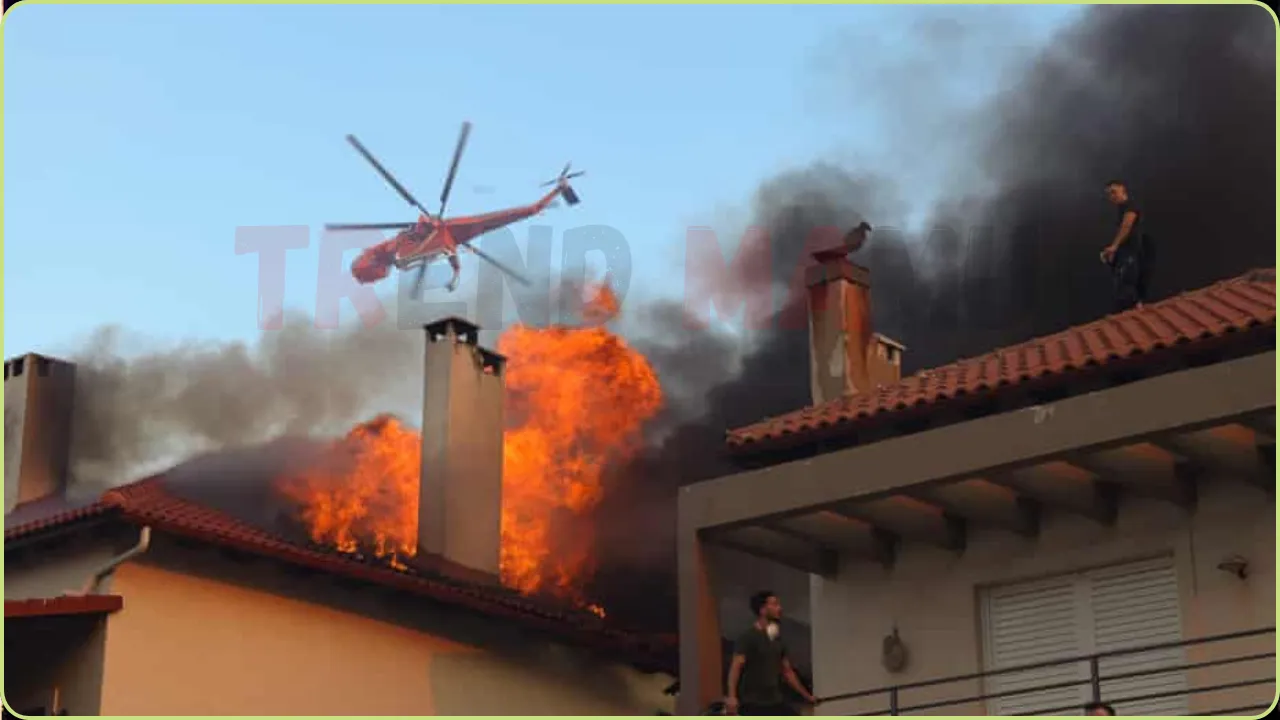
Fire Department spokesperson Vassilis Vathrakoyannis warned that “the real difficulties are ahead,” citing persistent high-risk conditions. By 10:20 p.m., the fire had no active front, but hotspots threatened Parnitha National Park, a critical ecological zone.
Greece’s Nationwide Wildfire Struggle
Greece is grappling with 52 wildfires across the country, with 44 contained early. Major blazes on Crete, Evia, and Kythera have stretched resources, deploying 335 firefighters, 19 planes, and 13 helicopters, limited to daylight operations. On Kythera, 138 people, including an infant, were rescued from Limnionas beach, while Evia’s Triada area saw evacuations and damage to two fire trucks.
In Messinia’s Polythea, residents fled toward Kyparissia. A July 3 fire on Crete displaced 5,000 tourists, burning 3,700 acres, underscoring Greece’s status as a wildfire hotspot. Climate change, driving hotter and drier summers, has worsened these events, with temperatures hitting 42°C (107°F) in June 2025.
Regional Fire Crisis in Southern Europe
The Kryoneri blaze aligns with a regional surge in wildfires. In France’s Aude region, a July 26 fire consumed 600 hectares (1,500 acres), evacuating two campgrounds and 10 homes near a beach resort, with 630 firefighters and 12 planes deployed. Three firefighters were treated for smoke inhalation.
Albania faced 26 fires on July 26, following a blaze in Delvina that injured three and displaced 2,000. Kosovo reported livestock losses, while Turkey’s Izmir fires killed two and destroyed 200 homes. These incidents, fueled by heatwaves and winds, highlight the Mediterranean’s escalating fire risk, with scientists attributing intensified blazes to climate change.
Impact and Future Challenges
The Kryoneri fire has caused “immeasurable” destruction, with smoke reaching central Athens. Five hospitalizations, including an elderly woman with stroke symptoms, reflect the human toll. Minister Giannis Kefalogiannis described July 26 as “extremely challenging,” urging vigilance as the heatwave continues through July 28. Czech firefighting units are supporting Greece, but nighttime restrictions and winds limit progress.
With no deaths reported in Kryoneri, efforts focus on containment and aiding evacuees. However, Greece’s strained resources face a critical test as extreme fire risk persists, threatening further devastation across urban and ecological areas.