




Woman Harrowing Drive Through Flooded Tunnel Near Detroit Metro Airport Captured on Video. Karen Humphrey Navigates Rising Waters and Debris in Dingell Drive Tunnel Amid Record Rainfall
On July 28, 2025, Karen Humphrey faced a terrifying ordeal when she drove through a severely flooded tunnel on Dingell Drive near Detroit Metro Airport’s McNamara Terminal, capturing the experience on video. Amid intense thunderstorms that dumped record-breaking rainfall across metro Detroit, Humphrey and her passenger encountered water several feet high, floating debris, and a dramatic “waterfall” cascading into the tunnel.
Miraculously, they emerged unharmed, though authorities strongly advise against such risky actions. Below is a detailed account of the incident, its context, and the broader implications of the flooding, incorporating information from web sources and critically examining the event.
A Perilous Journey Through the Flood
As Karen Humphrey exited the Delta terminal at Detroit Metro Airport around midday on July 28, 2025, she entered the Dingell Drive tunnel, a key access route to the McNamara Terminal in Romulus, Michigan. Severe thunderstorms had unleashed 2.68 inches of rain in a few hours, breaking the previous July 28 record of 2.16 inches set in 2011, according to National Weather Service (NWS) meteorologist Sara Schultz. The tunnel was inundated, with water reaching several feet high and a “waterfall” pouring from a concrete wall, likely from overwhelmed drainage systems, as captured in Humphrey’s video.
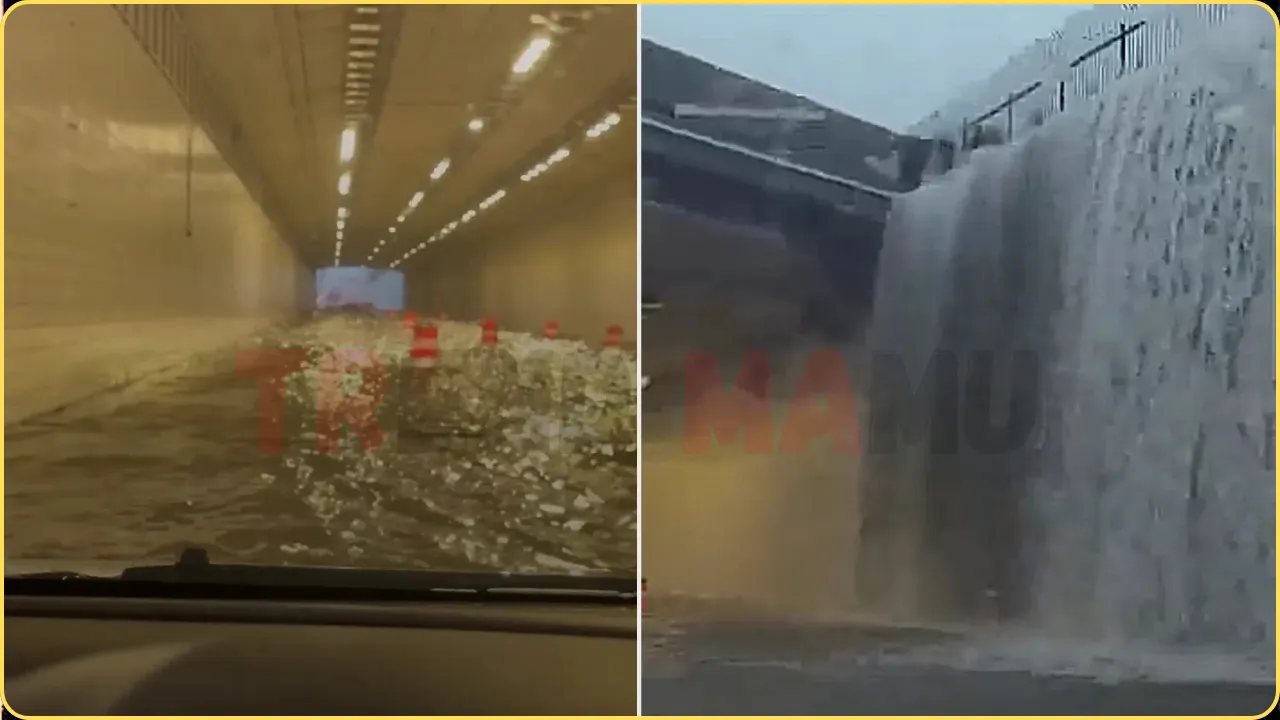
In the footage, Humphrey’s voice trembles as she repeats, “Dear God, please let me make it through,” while her passenger urges her to drive slowly. The water, described as splashing onto the car’s hood and nearing the passenger-side window, submerged the vehicle’s lower half. Floating traffic cones and debris posed additional hazards, with a gasp audible as the car narrowly avoided obstacles.
Despite the rising water, Humphrey navigated the tunnel and emerged safely, with the car still operational—a remarkable outcome given the risks. Authorities later emphasized that driving through standing water is dangerous, urging drivers to “turn around, don’t drown.”
The video, widely shared online, highlighted the severity of the flooding, which one passenger called “a nightmare scenario.” Humphrey’s decision to proceed, despite a visible waterfall at the tunnel’s entrance, underscores the panic and confusion during the crisis. The incident echoes a 2023 flooding event at the same tunnel, where 5.3 inches of rain overwhelmed infrastructure, revealing persistent vulnerabilities.
Metro Detroit’s Flash Flood Crisis
The storms on July 28, 2025, caused widespread chaos across metro Detroit, with 2–5 inches of rain falling in areas like St. Clair Shores (4 inches), Roseville (3.01 inches), and Sterling Heights (2.92 inches). Flash flood warnings were issued as roads, including Wayne Road and Interstate 94, became impassable, stranding vehicles and prompting rescues by Romulus police.
Detroit Metro Airport faced major disruptions, with over 400 flight delays and 60 cancellations by 7 p.m., including a ground stop for Delta flights due to hail inspections for 27 planes. The Dingell Drive tunnel, a low-lying choke point, was among several flooded areas on the airport campus, halting traffic and stranding travelers like Sreeni Reddy, who faced a two-hour delay returning to Novi.
The Wayne County Airport Authority (WCAA) issued a warning about flooding across the campus, advising caution and urging travelers to check flight statuses. By 7 p.m., floodwaters had receded, and roads, including the Dingell Drive tunnel, reopened. However, the event disrupted operations for hours, with employees like Michael Frazier walking over a mile to reach alternative routes. The NWS reported wind gusts of 44 mph and half-inch hail, exacerbating the chaos.
Infrastructure Vulnerabilities Exposed
The Dingell Drive tunnel’s flooding is a recurring issue, with similar incidents in August 2023 and 2014. A 2023 Wayne County analysis pinpointed electrical power failures in stormwater pump stations as a root cause, noting that stations 9 and 10, covering the tunnel, were overwhelmed during a 5.3-inch deluge.
Flooded switchgear triggered a chain reaction, rendering the tunnel impassable until power was restored. A multi-year construction project, launched in January 2024, aims to upgrade the tunnel’s drainage, lighting, and ventilation systems, but work is ongoing and not due to finish until 2027. The 2025 flooding suggests these upgrades are not yet sufficient to handle extreme rainfall.
Critically, the airport’s infrastructure, built below grade decades ago, remains vulnerable to climate-driven storms, which are increasing in frequency. The NWS’s 1.5–2.5 inches per hour rainfall rate on July 28 overwhelmed existing systems, highlighting the need for robust redesigns. The WCAA’s efforts to pump water out were hampered by the storm’s intensity, raising questions about preparedness despite ongoing improvements.
Broader Implications and Safety Warnings
The incident underscores the dangers of driving through flooded areas, as Humphrey’s survival was an exception, not the norm. The NWS and Romulus Fire Department reiterated that even 6 inches of moving water can sweep vehicles away, risking lives. The flooding, part of a broader wave of extreme weather impacting the U.S.—including New York City’s rainfall records and Texas flood warnings—reflects climate change’s growing impact on infrastructure.
Humphrey’s video serves as both a cautionary tale and a testament to human resilience, but it also highlights systemic issues. The WCAA’s slow progress on tunnel upgrades, despite known risks, suggests bureaucratic delays or underfunding.
While no injuries were reported in Humphrey’s case, the potential for tragedy was high, and public sentiment online called for better flood management. The event, alongside global stories like Russia’s tsunami and Beyoncé’s tour finale, underscores the unpredictability of natural disasters.